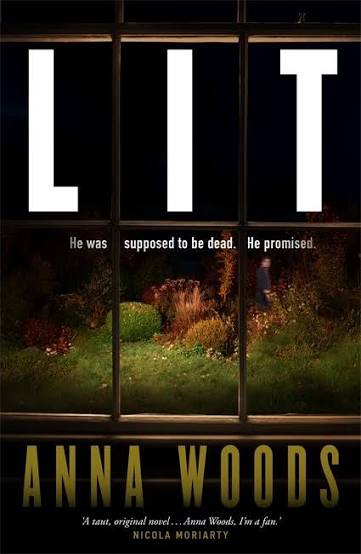

Anna Woods’ debut novel, LIT, is a dark literary thriller about love, money laundering, and architecture. It centres around Virginia Ishak – Gin for short – and her two closest colleagues, Clarissa (known as Clary) and Billy. The three of them met at university, studying architecture, and have a complex relationship. Billy was once Clary’s boyfriend, a boy who ‘knew things, or at least appeared to. Vast, glittering things I thought I might never know. Things that allowed him to hold court in the studio, mesmerising the gleaming-haired, shiny-lipped girls, like a callous god.’
Clary is now Gin’s partner in life and in business. Clary’s privileged background makes her an object of both adulation and frustration for Gin:
Like an exotic bird in a museum, she’d lived in glass her whole life. I wanted to protect her. Keep her safe. But sometimes I wanted to smash the bell jar she lived in. Show her the meat and blood and shit of the world. The things people did to give her the pretty life she took for granted.
At university, Gin never thought she fit in with the rest of her cohort, despite the fact that she does ‘pass, not for white exactly, but for some ethnically ambiguous other. I’ve been asked if I’m Spanish, Italian, South East Asian. Unthreatening, mostly.’ But it is money, and class, that truly separates her from her friends. ‘Billy sailed, Clary played golf. Their fathers were rich, white, and cultured. Mine was not.’ Billy’s late father was a star architect who died with ‘his masterwork incomplete’, so Billy is a ‘golden boy’ and ‘heir to a lineage’.
Both Billy and Gin are obsessed by Clary from the beginning, drawn to her polished beauty:
I had known it the first day in the quad, at the sausage sizzle and box of beer mixer, when Clary descended the stairs, her oversized indigo shirt clashing with the terracotta pavement and yellowed brick library, the dark colour outlining her. The effect was filmic – sound dropped away, my vision zoomed in. I wasn’t the only one; Billy’s eyes turned, telescoped, flashed. Clary didn’t realise her power.
The three have opened an architecture business together called LIT, for their last names – Lovelace, Ishak, Taylor. (‘Clean, simple,’ Gin thinks. ‘Combustible, too.’) This is not the only ‘lit’ angle in the novel. Billy’s last name, Lovelace, is one of the author’s nods to Samuel Richardson’s 1748 novel Clarissa: Clary is named for the heroine, Billy for its manipulative rogue; important clients in the novel are the Harlowes, after the original Clarissa’s unsympathetic family. These all suggest Clary may find herself trapped, desperate and doomed as her namesake.
When the novel opens, the partnership at LIT has gone very wrong. Billy has disappeared; Gin thinks that he is ‘supposed to be dead’. Her first-person narration hints at withheld (incriminating) information: Billy, she says, ‘charmed most people, but I found him odious. You would too, if you knew what I’d been through.’ Their business is failing, the sparseness of their once-bustling office now ‘accusing’ in its emptiness: ‘it reminded me we’d been successful, once’.
Gin is in deep personal and business debt, with Clary growing more and more aloof. Clary can seem relentlessly cruel and unlikeable, so Gin’s loyalty to her can feel perplexing. But Woods still presents an acutely observed relationship drama between the two characters, their disagreements not vicious or loud, but portrayed as ‘polar expeditions; frozen tundras, cracking ice sheets, indigenous languages to learn.’
When Billy reappears, Gin feverishly tries to hide this development from Clary, along with her debts and spiralling mental health. She even starts to hallucinate, ‘convinced of a malign presence’ in the shadows of their lives. Gin experiences everything too intensely, and is a judgmental, even obsessive architect – all the time. The kitchen in their rented business premises, with its egg-shaped pendant lights and ‘hideous plastic bar stools’ is an ‘assault on my sensibilities’, created by a designer who ‘had taken their aesthetic cues from a road cone’. In a café – a ‘dingy American chain’ – she feels that ‘the unattractive surroundings had me ill at ease … [and] the ugliness of the building infected my mood’. This, even though she proclaims her own ‘egalitarian instincts’ and says she dislikes the ‘studied hauteur of architects who denigrate working class spaces’.
Every space has class implications (and tensions) for Gin. Woods demonstrates a discerning eye for very Auckland class distinctions in her subtly scathing descriptions of Clary’s rich, white North Shore family – the father’s business is ‘ephemeral,’ the mother ‘often half-drunk’ on ‘grand cru, of course.’ Gin dismisses this world as ridiculous but still longs to be part of it. As a student she was ‘dizzied by the belief they knew who they were’ when ‘I knew nothing of the world’. She has to disguise herself to fit in – at university, at work, at social events. Gin wonders if she is ‘a wolf in sheep’s clothing’ although this suggests no strength or cunning to her, just ‘an eviscerated sack of skin, hanging bloodied from the wolf’s back.’
Woods remains true to the point of view of an over-achieving, over-thinking main character, and the Auckland she evokes feels vivid and real. The ‘mirrored-glass window displays, with velvet ropes and security guards at the door, a few metres from buskers, broke students and rough sleepers,’ and the ‘green hump of Albert Park’ solidify the setting and ground the reader in the story, even as Gin and Clary float off into their own worlds.
The story moves between the main timeline and flashbacks to before Billy’s disappearance, suggesting Gin’s panic and paranoia. Some scenes take on a nightmarish quality, Gin experiencing a ‘sudden disturbing sense he was coming for her … To tear it all down. Everything I’d worked for. Everything I’d built.’ The novel may have benefitted from a tighter timeline, to retain some of the tension promised in the first half of the story, but this slightly looser structure means Gin’s reliability feels more and more suspect. Limited to her point of view, the narrative grows increasingly claustrophobic, and we don’t know how much we can trust her. ‘Perhaps it didn’t happen how I’ve said,’ she admits, although ‘it sure felt the way I’ve described.’ When Gin insists she was right, she then concedes: ‘at least, I thought so then, having not yet understood all the ways I was wrong.’
LIT is a compelling literary thriller, an artful and stylish debut. Woods demonstrates her affinity for the genre by giving us enough sinister hints of what is to come without spoiling the powerful finale.